Children’s own farm and garden on Campus!
Date: 2024.03.15
Editor: MSS
2020 官网升级中!现在您访问官网的浏览器设备分辨率宽度低于1280px请使用高分辨率宽度访问。

Date: 2024.03.15
Editor: MSS
MSS Montessori Education not only honors the variety of work experienced by children in the classroom, but also advocates the idea of getting children out into nature, to gain multi-sensory experiences of the changing seasons and the importance of sowing seeds.
Arbor Day Highlights at WHQ Campus

Every child in WHQ campus received a “plant germination observation cup” to sow the seeds, placing the cup in a place with suitable temperature, and patiently observe how the seeds take root and germinate. The older children recorded their observations by themselves, just like little botanists. In this semester, each class was given a seedling or seed of their own class name, and they will have the opportunity to cultivate their own “class name plant”, tending to the different forms of the plant as it grows, just as each unique child grows on their own. Parents also participated in the Arbor Day by loosening the soil, planting, fertilizing, watering and sowing a variety of flower and vegetable seeds with their children.In the days to come, the children will continue to take care of these plants, and in the process of observing the growth of the plants, they will feel the magical power of nature, appreciate the natural beauty of blossoming, and experience the joy of a good harvest!
Arbor Day Highlights at XH Campus

Teachers from Xuhui campus explained the knowledge and importance of trees to the children, helped them understand the meaning of Arbor Day, and invited them to share about plants based on their own experiences, encouraging them to express themselves freely. The school also invited the children to plant small white flowers in their classes and asked them to plant the flowers in pots they had carefully chosen to let play of their artistic creativity. Each class is also responsible for a plot in the vegetable garden and the children were all involved in planting and picking vegetables. By busying themselves in the vegetable garden, the children were very concentrated and did enjoy the process of working with their own hands.
Arbor Day Highlights at MH Campus

H campus prepared cherry and orange trees (three in total) for the children. They dug, planted and watered the trees together with their own hand. They planted the three trees in their vegetable garden. Afterwards, in the days to come, the children need to take turns to take care of them and help them be able to take root and grow! The children will build up a sense of responsibility through planting and labor by themselves. In the future, when they see the trees gradually grow up and become flourishing, they will also be filled with a sense of achievement!
Why is it so important to be close to nature?
01 To Gain Multi-sensory Experience
The Montessori Method has always been advocating the idea of being close to nature. In nature, children can observe the growth process and color changes of plants, smell the scent of flowers in the air, listen to the chirping of insects and birds, touch the smooth texture of stones, and experience cold and heat at different temperatures ……
In nature, they can experience the journey of a crop’s life brought about by the changing seasons, from sowing and germination, to fruiting and harvesting, and finally back to sowing……
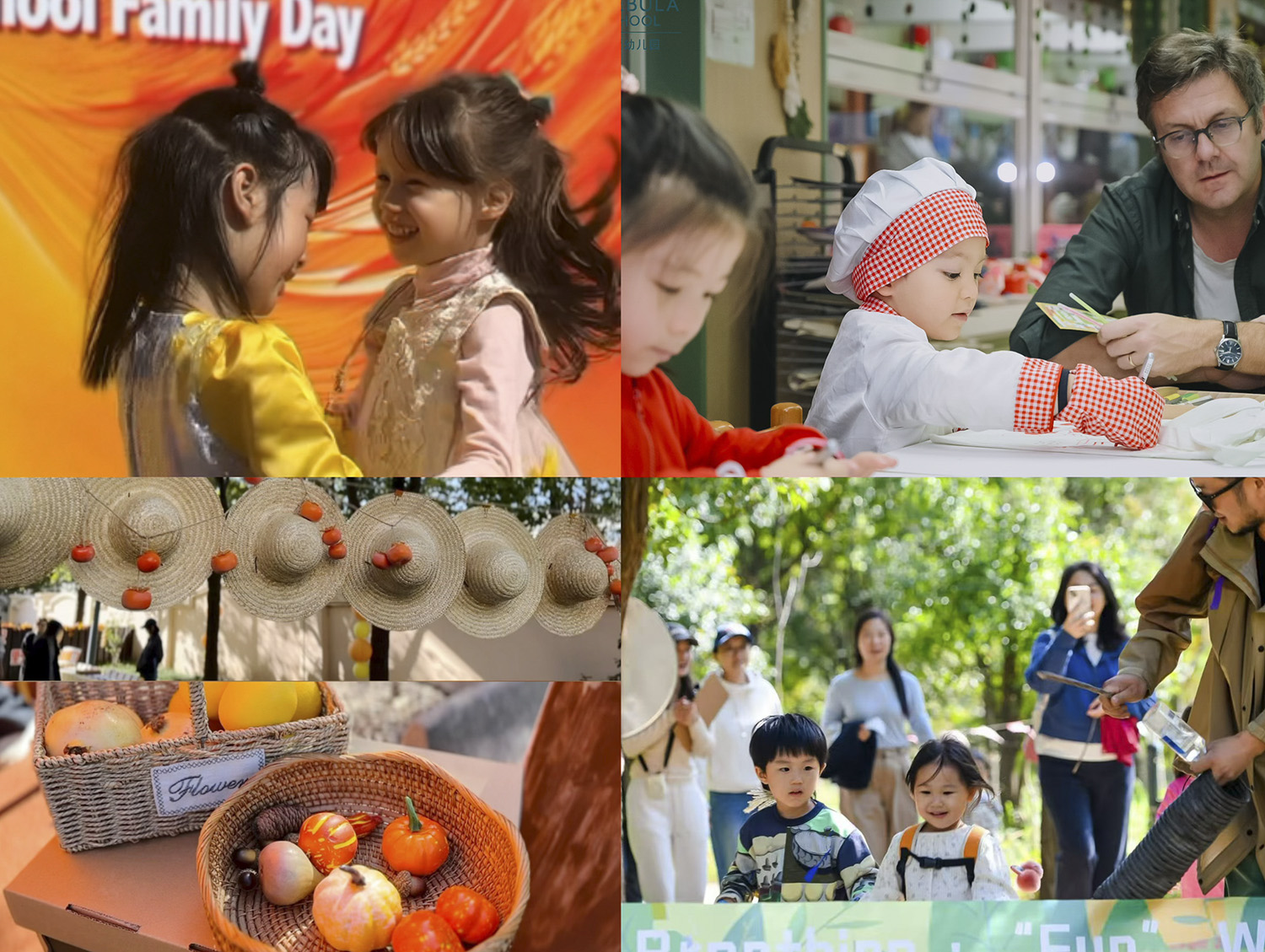
From the very beginning of MSS, we have taken nature into account in our designs. At MSS, in addition to our unique outdoor spaces, we have dedicated land for children’s farms and gardens. Children can get involved in the process of watering, planting and picking plants in nature.Our ancestors were full of wisdom. They understood and interpreted the world around them by observing the migration of animals and the growth of plants; they summarised the laws and researched the twenty-four solar terms, using their own experience to understand and interpret the world around them. Montessori education is designed to allow children to experience these laws and changes from a young age, thus creating a sense of reverence for nature and life.
02 To Receive the Education for Life
Life Education is not just about the natural environment, but also about the classrooms at MSS. In the MSS Toddler classroom, we provide exclusive plant cultivation work.
Depending on the season, there are different plant seeds in the classroom, and the children can plant the seeds in pots, observe them, cultivate them, and wait for them to germinate.
When the plant grows bigger and taller, the children can transplant it into a bigger pot and finally into the vegetable garden.In addition to these tasks, in the early childhood environment, the children will experience a variety of materials in the cultural area and learn about nature in all its dimensions.
In the classroom, the “Little Definition Books” will show children the “life” of fruits, vegetables and plants from seed, to germination, to fruit.For example, when children learn about things related to pumpkins, they learn about: the color, shape, touch and smell of pumpkins; they learn about the uses of pumpkin seeds and that pumpkins can be made into pumpkin soup, pumpkin pie……After learning about the life cycles, children would cherish food more. After picking vegetables and fruits, they can do hands-on food preparation: washing, cutting, cooking, cleaning ……
In this series of processes, they can co-operate and share with their peers.Montessori places great emphasis on food preparation, which is an interdisciplinary life “project” involving linguistic, cultural, and mathematical skills, requiring the child to think logically and to integrate all of them. Ultimately, the children will bring these combined skills back into their daily lives.
03 Grow from the Concrete to Abstraction
Montessori is all about: the process of knowing the real to the abstract as a way of developing a child’s imagination.Only when the child has the ability to understand the real does he have room to develop his imagination, i.e.: the ability to abstract is based on knowing the real existence.Let’s say a child ate an apple yesterday and then a banana today.
At night, he had a dream and told you about it. He said: “I dreamed of an apple-flavoured banana yesterday.”If he doesn’t know what a banana looks like or what an apple tastes like, he can’t produce an imaginary existence like “apple-flavoured banana”, he can’t abstract the color or taste, and then create it.
All imagery must be based on knowledge of real objects and the ability to abstract them, so the ability to image will grow. The development of this imaginative ability has taken place in countless ways throughout human history: the simplest example is the “airplane”.
How can we design an airplane if we do not know how birds fly? Getting closer to nature can help children further expand their horizons, mobilize their “multi-sensory experience” learning style, help them stimulate their imagination and help them get further in the ocean of thinking.


SHARE :